
Black Eyed Beans (Lobia)
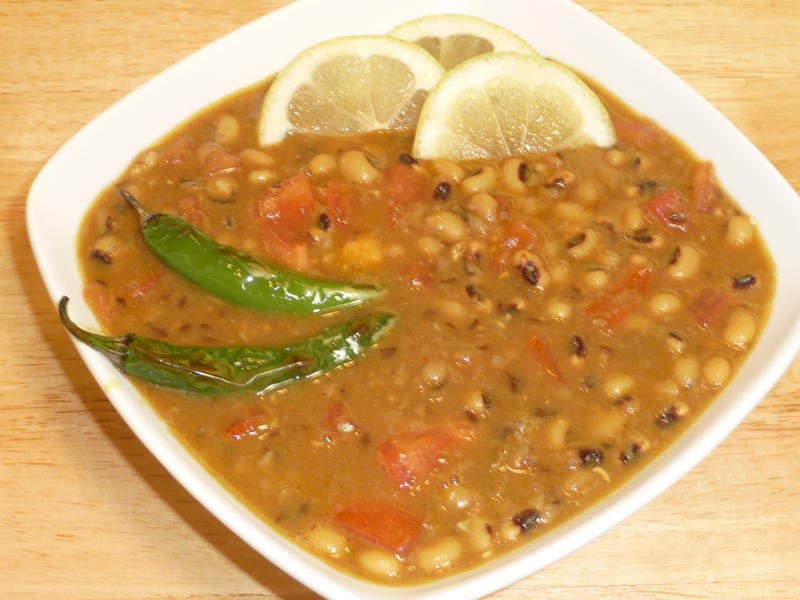
Black Eyed Beans (Lobia)
Ingredients
- 1 cup black eyed beans lobia, chawli
- 2 tbsp oil
- 1 tsp cumin seeds jeera
- 1/8 tsp asafetida hing
- 1 tbsp coriander powder dhania
- 1 tbsp ginger shredded
- 1/4 tsp red chili powder
- 1/4 tsp turmeric haldi
- 1/2 tsp mango powder aam choor
- 1/4 tsp garam masala
- 1 tsp salt
- 1 tomato chopped
- 3 cups water approx.
Garnishing
- 2 green chili
- 2 lemon slices
Instructions
- Wash and soak beans for one hour or more.
- In a small bowl, mix the ginger, green chili, coriander powder, turmeric, and 3 tablespoons of water to make a paste.
- Heat the oil in pressure cooker on medium heat. Test the heat by adding one cumin seed to the oil; if seed cracks right away oil is ready. Add the cumin seeds as they crack add asafetida, add the spice paste and stir for a minute until spices start leaving the oil.
- Add Black Eyed Beans, salt and water close the pressure cooker as pressure cooker starts steaming turn the heat down to medium and cook for 6-7 minutes.
- Turn off the heat and wait until the steam has stopped before opening the pressure cooker. Black-eyed beans should be soft and tender.
- Add mango powder, garam masala, and tomatoes, and cover the cooker for a few minutes. That will give tomatoes a chance to get semi-cooked with steam.
- Garnish this with lemon wedge.
Notes
Make The Best Black Eyed Beans Recipe
Mastering the Art of Black-eyed beans are a type of legume that are also known as black-eyed peas. They are a variety of cowpea and are commonly used in cooking around the world. Black-eyed beans are a popular ingredient in many cuisines due to their versatility and nutritional value. They are a good source of plant-based protein, making them a great option for vegan and vegetarian diets.
Additionally, they are naturally gluten-free, making them suitable for those with gluten sensitivities or celiac disease. Black-eyed beans can be used to make a variety of dishes, including salads, soups, stews, and curries. They are often used in combination with other ingredients such as vegetables, spices, and grains to create flavorful and nutritious meals.
How To Make The Best Black Eyed Beans Recipe
- Rinse the beans: Give your black-eyed beans a good wash under running water.
- Soak the beans (optional): Soaking the beans for at least 1 hour (or even overnight) will make them softer and easier to digest. You can skip this step if you’re short on time, but the beans may take longer to cook.
- Make a spice mix: Combine ginger, green chili, coriander powder, turmeric, and a little water to create a flavorful paste.
- Heat oil and spices: Add oil to your pressure cooker and heat it up. Then, add cumin seeds and wait for them to sizzle. This tells you the oil is hot enough. Once hot, toss in a pinch of asafetida (optional) followed by the spice paste. Let the spices cook for a minute or so until they smell fragrant.
- Cook the beans: Add the rinsed (and possibly soaked) beans along with water and salt to the pressure cooker. Close the lid and let it come up to pressure. Once it starts steaming, reduce heat and cook for 6-7 minutes.
- Release pressure and add flavor: Once done cooking, turn off the heat and let the pressure release naturally for a while. Then, carefully open the cooker. Now, add some mango powder, garam masala, and chopped tomatoes. Close the lid again for a few minutes to let the tomatoes soften with the steam.
- Serve and enjoy! Finish the dish with a squeeze of lemon juice for a fresh touch. Your delicious black-eyed beans are ready to be devoured!
Tips for Cooking the Best Black-Eyed Beans
Use Fresh Beans: Whenever possible, use fresh, high-quality black-eyed beans for the best results. Fresh beans will cook more evenly and have better texture compared to older beans.
Don’t Salt Too Early: Avoid adding salt to the cooking water until the beans are almost fully cooked. Adding salt too early can toughen the beans and prolong the cooking time.
Customize the Flavor: Experiment with different seasonings and aromatics to customize the flavor of the beans to your taste preferences. Don’t be afraid to get creative and try new combinations of herbs and spices.
Frequently Asked Questions (FAQs)
What are the health benefits of black eyed beans?
Black eyed beans are a nutritional powerhouse! They are a good source of protein, fiber, folate, iron, and magnesium. These contribute to a healthy heart, blood sugar control, and overall well-being.
Do I need to soak black eyed beans before cooking?
Soaking is not strictly necessary, but it helps reduce cooking time and can make the beans easier to digest. Soaking for at least 6 hours is recommended, or you can use a quick soak method.
How long does it take to cook black eyed beans?
Cooking time depends on whether you soaked them beforehand. Soaked beans will take about an hour to cook on the stovetop, while unsoaked beans can take up to two hours.
How can I use black eyed beans in recipes?
Black eyed beans are incredibly versatile! They are a delicious addition to soups, stews, salads, dips, and even burgers. You can find them used in cuisines worldwide, from Southern Hoppin’ John to Brazilian Feijoada.
Are black eyed peas the same as black eyed beans?
Yes, black eyed beans and black eyed peas are the same thing!
Where can I buy black eyed beans?
Black eyed beans are widely available in most grocery stores. You can find them dried in bulk bins or bags, or canned and pre-cooked for convenience.
How should I store black eyed beans?
Dried black eyed beans can be stored in an airtight container in a cool, dry place for up to a year. Cooked black eyed beans should be stored in an airtight container in the refrigerator for up to 5 days, or frozen for longer storage.
46 Responses
Leave a Reply
You must be logged in to post a comment.

Most delicious dish I’ve ever tasted!
Hi Aunty
You mention adding green chilli to the ginger paste, but there’s no mention of green chilli in the main ingredients ( only garnish). Red chilli powder is mentioned in the main ingredients but not in the method. Is it red chilli pwdr that has to be added to the paste, not green chilli? Would you clarify pls?
Many thanks in advance.
Start with 2 minced green chilies and add or lessen according to your spice level.
This was delicious. I have made several recipes from your website and all are delicious and representative of the food I loved during my years in southern Nepal and northern India. The best food I have ever had.
Beth, thank you
I used to work at an Ayurvedic restaurant and I think this is why the recipe does not have garlic or onions. This recipe doesn’t need either of them, anyway. I have used this recipe (without a pressure cooker) for several years now. I use this and only this for my new years black-eyed-peas recipes, for good luck. So simple and so darn good. I added a bit of hearty greens this time and still so wonderful.
My 16 yr old daughter and I eat this till its gone, we cant keep it. Maybe I should try a quadruple batch!
Heather, Thank you, I appreciate and make me happy.
Excellent! I made this today, and it was delicious, even though I didn’t have the mango powder or asafoetida. I used sun-dried tomatoes, since fresh tomatoes have little flavor in winter. To get mine to look like yours, I had to cook it for a couple of minutes longer and with a bit less water, in my pressure cooker. The videos are great, and I love seeing how the finished dish is supposed to look. So much better than using a cookbook, and having to guess. It is like having a favorite aunt to teach me Indian cooking!
Nicola, thank you and making the changes in the recipe is always good idea.
I made this today and it was delicious. I made it too watery though so added 1/2 cup of quinoa to thicken it up. Tasty!
Hello Aunty! I love this recipe and want to try it but what if I run out of tomatoes? What’s the alternate please. Thank you
Deepa I also make this without tomatoes, every thing remains the same
When I was in Hostel, I had a different kind of dry lobia. Hard to eat 🙂 this is yummy with roti and loved a lot.
I find the recipes easy to follow my family are great funs of Indian Cuisine. I am African by origin but have a Gujurati blood line..and visit India alot. Thanks so much Aunty
The recipe doesn’t mention the green chilli in non-garnish ingredients. Can you, please, update it?
If I don’t have a pressure cooker how do you suggest I coook this recipe and how long will it take?
many thanks, b
Beverly,
Do soak the beans, cook in heavy pan it should take about 40 minutes.
can we not fry the tomato alaong with masla rather than adding it at the last? will this differ in taste.
Manjulaji–how many chilies are in the paste?
This is quite a simple recipe for black eyed peas and quite tasty too.
Thank you
I loved this simple recipe. I’ve made it twice in a matter of one month. The second time, I tweaked it a little. I added some onions and garlic, it turned out fabulous.
Thank you Aunty for all the wonderful recipes. I love them all. I’m planning a Chaat party next month and I’m planning to try out the samosas. I also want to make my own puris for pani puri. Can’t wait to try them!
Made it today, simply tasty recipe Aunty, thanx for sharing.
hmm…. It is delicious… gr8 recipe Thank u so much…
Oh!!! A tasty recipe. Earlier i had tried lot of other recipes bcoz lobia is my favourite but this was the best. Thanks Manjula.
I’m making this black-eyed pea recipe for New Year’s Day.
It’s delicious and nutritious.
This is such a delicious recipe! I added chopped carrots to the pressure cooker for extra punch and it turned out fantastic. Thank you for your recipes!
Hello Aunty,
I loved this recipe. We make it very often but with onions and tomatoes in it. My mom use to make paratha of lobia. Once it is boiled, take it out and add dry spices like salt, red chilli, garam masala and mango powder. Mash it an dthen stuff in parathas like any other stuffed paratha. This use to taste so good during winter in India. Miss those days. Thanks for sharing this recipe with us.
Monica,
Thank you for sharing.
Delicious! I just made these and was skeptical they would be flavoursome enough but they are lovely. Such a cheap, healthy and tasty dish!
Hi Aunty – I do not have a pressure cooker and would like to make this dish. Would a regular cast iron pot work instead of teh pressure cook? if yes, how much longer does the beans need to cook? Please advise when you have a moment. Thank you.
Rony, you can cook Black Eyed Beans without pressure cooker cooking can take 45 minutes to an hour.
I think this will make a great soup too if done slightly watery and mash the beans a little.
Hello Aunty,
I tried today this recipe. it was very tasty. thank u so much for teaching such simple and yummy dishs….
love
juhi
Hi Manjula aunty,
i tried the lobia for lunch today. it was sooooo super fantastic. i used to think lobia cant be made without the onion garlic tadka. but today’s lunch was made special by ur recipe. thanks.
Hi Manjula,
your recipe look lovely asusual. i see you are using smart plus cooker can i kno which one it is please?
thanks
Can you make this without a pressure cooker?
Michele,
You can do without pressure cooker just have to cook little longer about 45 minutes.
blacke eyed beans gravy was nice, thank you madam
yum yum- the mango powder gives it such a lift! thanks- great recipe and explanation, as usual!
Thank you! I love the tip of making a spice paste, that will be so useful for me.
Going to have this for lunch tomorrow!
Sounds soooooo good. Can’t wait to make it! Thank you, Majula!
Healthy curry for roti and rice..
Delicious and healthy dish. This dish is a favourite for all of us especially my little niece.
Cannot play the video.
Neela,
You should be able to play video now.
Thank-you for fixing the video. It’s just not the same without your wonderful voice!